

Signs and symptoms of aTTP
The symptoms of acquired thrombotic thrombocytopenic purpura (aTTP) are driven by microvascular thrombosis, which is unpredictable and potentially fatal1,2
Microthrombosis can have serious acute and chronic consequences in thrombotic thrombocytopenic purpura (TTP)—putting patients at risk for devastating effects and death without urgent treatment.
Microthrombosis can occur in any organ with microvessels, but the most commonly affected are3
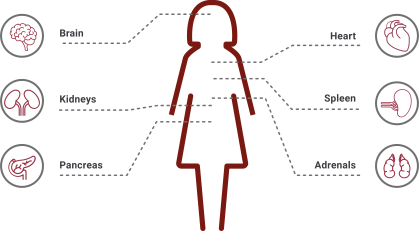
ISTH=International Society on Thrombosis and Haemostasis.
Thrombotic thrombocytopenic purpura (TTP) symptoms
TTP is a form of thrombotic microangiopathy (TMA), a group of disorders that is characterized by disseminated thrombus formation in arterioles and capillaries.4
This leads to significant clinical consequences like4
- Thrombocytopenia
- Microangiopathic hemolytic anemia (MAHA)
- Potential end-organ ischemia
Diagnosing TTP can be challenging due to its diverse array of clinical manifestations and significant symptomatic overlap with other TMAs.5
Because of this, a diagnosis of TTP may involve many specialties, including6
- Hematologists
- Neurologists
- Nephrologists
- Emergency/critical care physicians
- Transfusion medicine specialists
TTP should be suspected in all patients presenting with MAHA and thrombocytopenia unless an obvious alternative etiology is present.6
Signs and symptoms of aTTP include

Skin bruising7
Skin bruising in TTP often manifests as petechiae or purpura. These are small red or purple spots on the skin.

Neurological abnormalities7-9
Neurological manifestations of TTP are diverse and can range from mild to severe. This includes visual symptoms, confusion, paresis, dysarthria, aphasia, seizures, stupor, and coma.

Cardiac abnormalities10
The cardiac manifestations may range from silent arterial thrombosis and accelerated hypertension to more severe conditions like acute myocardial infarction (AMI), atrial fibrillation, and congestive heart failure (CHF).

Gastrointestinal symptoms11
Gastrointestinal symptoms may include nausea, vomiting, abdominal pain, and diarrhea.

Renal complications9
Renal symptoms may present as proteinuria and hematuria. Acute renal failure with marked azotemia, fluid overload, hypertension, and need for dialysis is comparatively less frequent.

Other Symptoms7
In addition to the more specific manifestations listed above, TTP can also present with more general symptoms such as fever and fatigue.
While TTP may present in heterogeneous ways, traditionally, the classical symptomatic pentad of TTP is7
- Fever
- Purpura or bleeding associated with thrombocytopenia
- Hemolytic anemia
- Renal dysfunction
- Neurologic dysfunction

Experts explain TTP pathogenesis

The signs and symptoms of TTP
Dr Marie Scully details the variable, complex signs and symptoms of TTP.

TTP patient case study
Dr Flora Peyvandi shares her experience with a 24-year-old female patient, underscoring the urgency and severe consequences of TTP when signs go unnoticed.

of TTP episodes result in ischemia due to platelet aggregation in the microcirculation of the brain.3
The consequences of microthrombi can be severe, with TTP potentially resulting in acute thromboembolic events such as1,2,4

Stroke

Myocardial infarction

Arterial thrombosis

Early death
Consequences can also be long-term
Rapid recognition of aTTP is critical to outcomes.
Long-term risks of TTP can be life-altering for patients. Thinking beyond the acute stages is imperative.
References: 1. Joly BS, Coppo P, Veyradier A. Thrombotic thrombocytopenic purpura. Blood. 2017;129(21):2836-2846. doi:10.1182/blood-2016-10-709857 2. Goel R, King KE, Takemoto CM, Ness PM, Tobian AAR. Prognostic risk-stratified score for predicting mortality in hospitalized patients with thrombotic thrombocytopenic purpura: nationally representative data from 2007 to 2012. Transfusion. 2016;56(6):1451-1458. doi:10.1111/trf.13586 3. Moake JL. Thrombotic thrombocytopenic purpura: the systemic clumping “plague.” Annu Rev Med. 2002;53:75-88. doi:10.1146/annurev.med.53.082901.103948 4. Saha M, McDaniel JK, Zheng XL. Thrombotic thrombocytopenic purpura: pathogenesis, diagnosis and potential novel therapeutics. J Thromb Haemost. 2017;15(10):1889-1900. doi:10.1111/jth.13764 Epub 2017 Jul 27. 5. Gogia P, Gbujie E, Benge E, Bhasin S. Thrombotic thrombocytopenic purpura: Revisiting a miss and an inevitable consequence. Cureus. 2020;12(7):e9283. doi:10.7759/cureus.9283 6. Zheng XL, Vesely SK, Cataland SR, et al. ISTH Guidelines for the diagnosis of thrombotic thrombocytopenic purpura. J Thromb Haemost. 2020;18(10):2486-2495. doi:10.1111/jth.15006 7. Azoulay E, Bauer PR, Mariotte E, et al; Nine-i Investigators. Expert statement on the ICU management of patients with thrombotic thrombocytopenic purpura. Intensive Care Med. 2019;45(11):1518-1539. doi:10.1007/s00134-019-05736-5 Epub 2019 Oct 7. 8. National Heart, Lung, and Blood Institute. Thrombotic thrombocytopenic purpura (TTP). National Institutes of Health. Updated February 18, 2025. Accessed May 8, 2026. https://www.nhlbi.nih.gov/health/thrombotic-thrombocytopenic-purpura 9. Tsai H-M. The kidney in thrombotic thrombocytopenic purpura. Minerva Med. 2007;98(6):731-747. 10. Wiernek SL, Jiang B, Gustafson GM, Dai X. Cardiac implications of thrombotic thrombocytopenic purpura. World J Cardiol. 2018;10(12):254-266. doi:10.4330/wjc.v10.i12.254 11. Chiasakul T, Cuker A. Clinical and laboratory diagnosis of TTP: an integrated approach. Hematology Am Soc Hematol Educ Program. 2018;2018(1):530-538. doi:10.1182/asheducation-2018.1.530 12. Scully M, Hunt BJ, Benjamin S, et al; British Committee for Standards in Haematology. Guidelines on the diagnosis and management of thrombotic thrombocytopenic purpura and other thrombotic microangiopathies. Br J Haematol. 2012;158(3):323-335. doi:10.1111/j.1365-2141.2012.09167.x. Epub 2012 May 25.